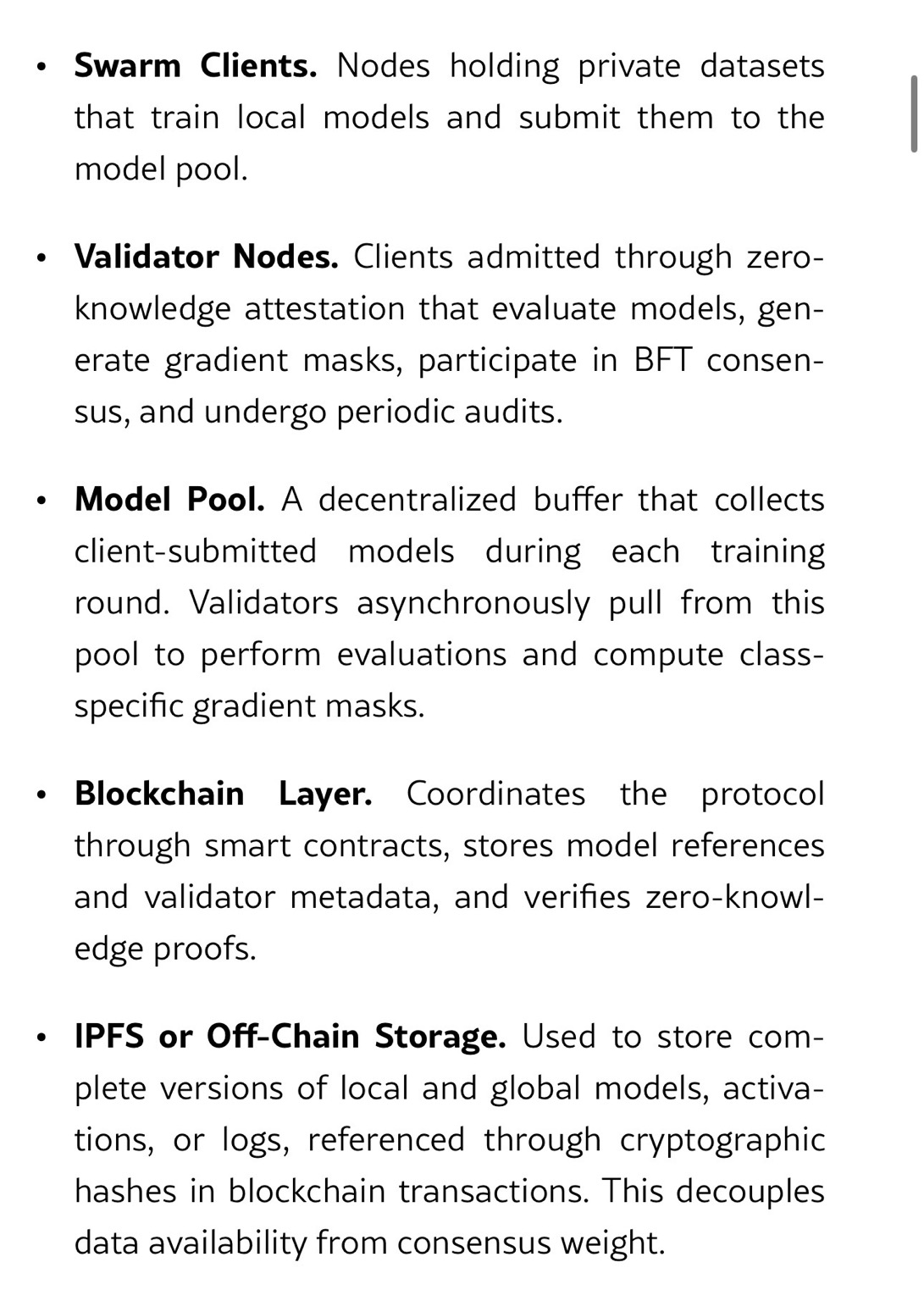
Consensus: Validators evaluate these "masks" and vote on the best options. Iterative Cycle: An intermediate layer of the neural network is used to randomly verify the work of validators (specifically, to check whether their updates are based on valid data). Important clarification: While ZK proofs in this context verify the correctness of a specific computation, they do not prevent the submission of falsified data; the fourth mechanism (the iterative cycle) is designed to address this.This is an interesting area of research aimed at enhancing participant privacy during AI model training. Naturally, there are some drawbacks—such as the lack of complete privacy due to the use of intermediate neural network layers, or the issue of data reuse.
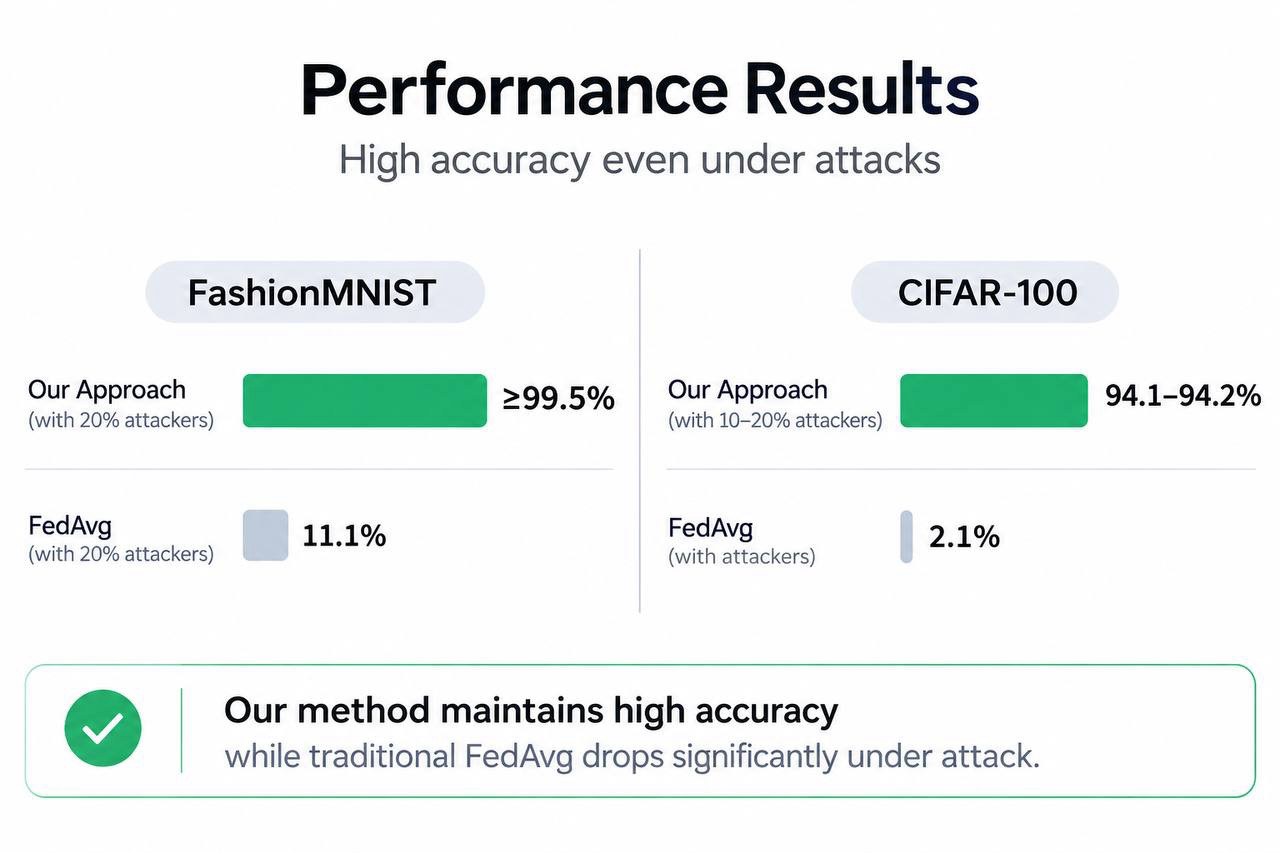
Decentralization + ZK + blockchain + AI training. This approach combines cutting-edge fields to facilitate AI training. It proposes a method for collaborative AI training within a decentralized network, utilizing Zero-Knowledge (ZK) proofs to ensure privacy. The challenge with conventional methods is that participants must disclose their data; furthermore, they might possess low-quality data or act dishonestly. The proposed approach addresses these issues through several mechanisms: Verification: A participant runs a consensus-agreed AI model on their own data and generates a ZK proof confirming the correct execution of the computation, which the network then verifies. Filtering: Validators analyze the gradients used to update model parameters and create "masks." In this context, a mask acts as a quality control mechanism, specifying which parameters to retain fully and which to attenuate. arxiv.org/abs/2611.11477
The author hasn't signed the social smart contract — the cast may be restricted on farcaster.xyz, so the Farcaster app isn't offered below.