Ayan
Thanks a lot! And yes I actually want to go back and see the same with respect to how people from different fields might cluster! This is where I read about the discussion series: https://www.tandfonline.com/doi/abs/10.1080/0950069940160406 also lots of nice quotes from Nobel laureates on intuition in this:

In my new piece I'm confronting the critical parts of scientific cognition that you can't just scale past. I’ve been thinking a lot about which human intelligences we’re actually aiming to replicate and optimize artificially, and which ones we seemingly reveal in the process. Read it here:
I heard that sufficiently decentralized social might be back👀 In that case I’d love to revive /synbio 🧬 Here is my new piece: Synbio’s Reality Check Vol. II 🧬 The early 2010s pitch that biology will be perfectly programmable is back with a vengeance. I’m exploring AI, automation infrastructure, some critical gaps between digital and physical biology dreams, and new, hopeful/curiously strange emerging frontiers. Read it on my blog Life, Edited: https://editlife.substack.com/p/synbios-reality-check-vol-ii For more foundation on Synbio’s journey check out my first ‘Synbio’s Reality Check’ piece from about a year ago: https://editlife.substack.com/p/synbios-reality-check
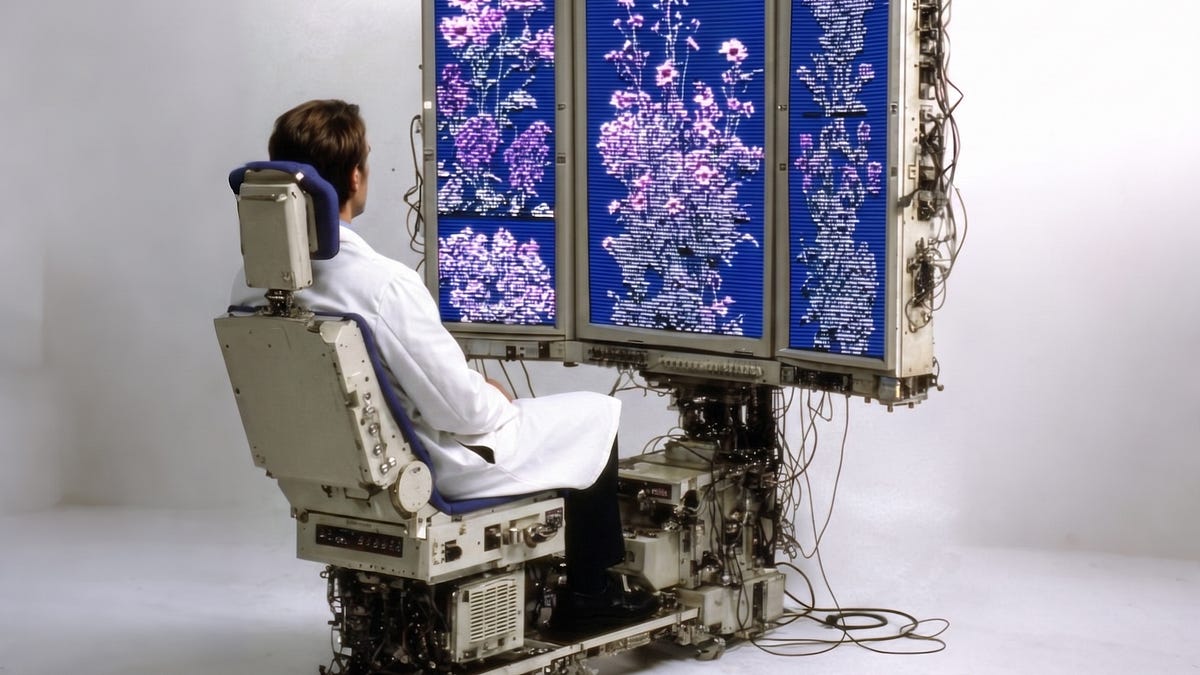
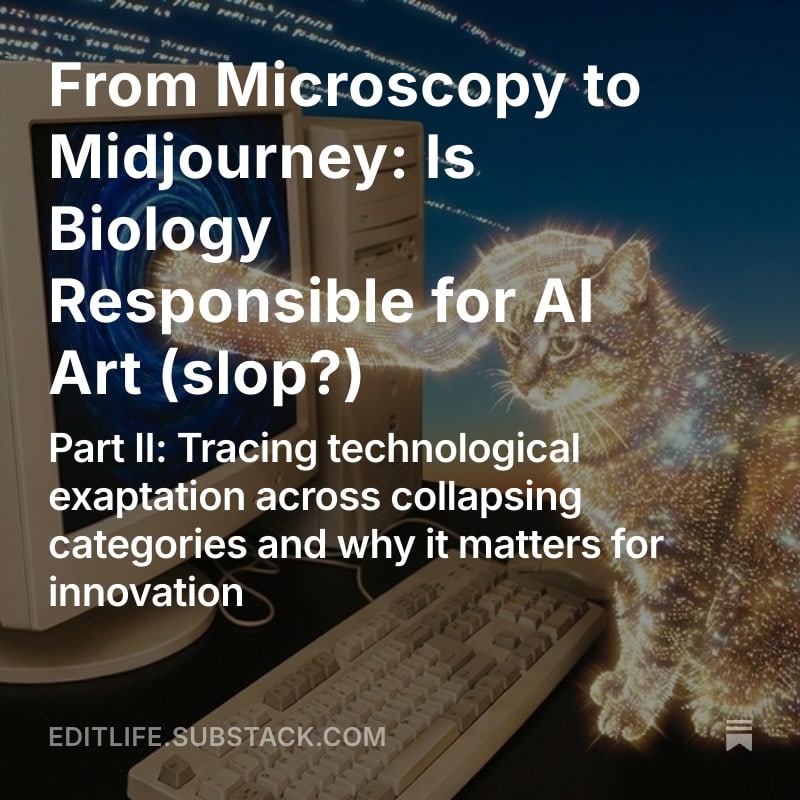
Is biology responsible for AI art (slop¿)? You can read my new post and decide for yourself. This piece takes you on a journey. It begins with electrodes in cat brains, somewhere in between we go from recognizing cats to detecting cancers, taking street mapping architecture and applying it to cell segmentation, then magically ends with machines generating images from text prompts. You might find that the boundaries between fields are more porous than we think. You might even go further and adopt this perspective as an innovation strategy.